

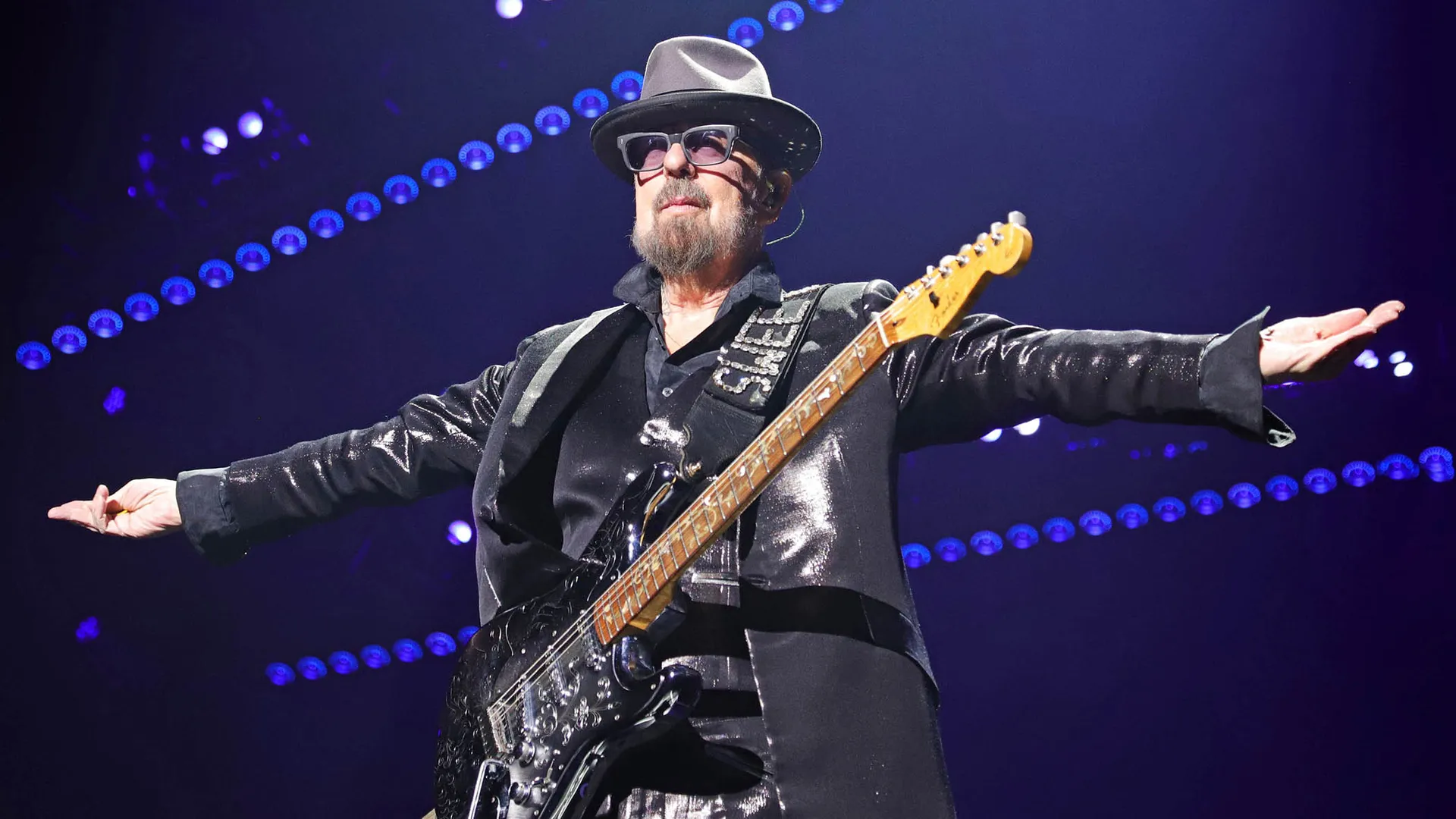
Has a guitarist ever been so misunderstood as Dave Stewart of Eurythmics? Forging a partnership with buzzcut-android frontwoman Annie Lennox in 1980, the British duo’s icy breakout single, 1983’s Sweet Dreams (Are Made of This), was the ultimate double-edged sword, topping the Billboard Hot 100, but ensuring the music press settled on a lazy tag – “synth-pop” – that stuck until the band’s split seven years later.
Joining our Zoom call a lifetime later from his home in the Bahamas, 74-year-old Stewart is happy to put a little distance between him and the “s” word. A virtuoso player and keen collector – whose Eurythmics material always featured stellar guitar parts, albeit often woven into each song’s fabric – his recent solo output has fully embraced the instrument that turned his head as a lost teenager.
On the heels of last year’s man-and-guitar release, Dave Does Dylan, Stewart’s prolific late period means he’s ready to go again with The Way It Was Back Then. It’s the result of a stream-of-consciousness recording session, he tells us, that laid him utterly bare.
You wrote these songs without thought or preparation. How did that work?
I was just spontaneously playing and singing at the same time. I said to my engineer Jesse [Samler], “The first take has usually got something, so let's just build around that.” The lyrics came off the top of my head – that’s why sometimes it doesn’t rhyme – and there were no clicks. I was thinking, “I'll fix it later.”
But later on, I didn't want to fix hardly anything. There's nobody else on the album. Jesse plays drums, and we both play bass and guitar. I was amazed when I realized we had an album.
Would you recommend not overthinking it when it comes to songcraft?
Well, the artists I really admire, quite a few of them were similar. John Lennon might put down something on a piano and half of it he was just singing whatever he felt.
I remember, I had a house in London, and after a day at the studio, I’d sit around the kitchen table with whoever I was working with, making up words and songs. Bob Dylan was one of these characters that liked doing this. Maybe that's partly where my influence came from.
What chords and voicings did you instinctively reach for?
I like straightforward sequences, like Your Wishes. But I’m also a fan of naughty chords, as George Harrison would call them. Makes Me Happy (and Sad) has a very strange chord, like an A minor with an F sharp on the first string.
Black Cat, I'm singing with an acoustic guitar. Then I come in with an electric solo and full drums, with a wah half-depressed, going through a Big Muff kind of distortion. It’s meant to sound like the anguish I'm singing about. Like, the acoustic section stays strong through all the struggles and trouble, then at the end it just goes “Fuck it.”
Lyrically, this album takes a hard look at your past. Do you have regrets?
Oh God, loads. For a start, I've been married three times. Fortunately, I got to exorcize a lot of my demons before Eurythmics began. My mum left my dad when I was 14, and at the same time, my knee was broken, which I sing about in Black Cat. I wanted to be a footballer, so that dream was shattered.
I didn't know what to do. I went from top of the class at school to bottom in one year. Everything just caved in. Then I started to listen to music and had my mind blown.
I ran off to London at 17. Saw the Stones play in Hyde Park. Started to get really stoned, smoking weed, then taking psychedelic drugs. Then I got addicted to speed and amphetamine sulfate – and had a massive car crash. I was at death's door quite a few times.
How did Eurythmics change your trajectory?
I’d started to come out of all that just before Eurythmics – and Annie was a great help. By the time Eurythmics started, I was 28 or 29, and I’d done just about everything. I think we were unique in that we were a couple, but we didn't write any songs in the four years we lived together.
There've been lots of artists who lived together, like Stevie Nicks and Lindsey Buckingham, who then were in Fleetwood Mac, then broke up. But we had already separated, then decided to become a duo. It's a very strange thing to do.
As such a great player, was it frustrating that Eurythmics was dubbed a “synth” band?
God, yeah. That's why, when Eurythmics stopped, I made two albums as Dave Stewart & the Spiritual Cowboys that were just full of guitars, getting it out of my system. Because Eurythmics records have loads of guitars on them. People don’t realise. Even on Sweet Dreams. Or on This City Never Sleeps, there’s this little muted guitar riff along with the synth, and I also played slide mixed with the sound of a subway train I’d recorded.
On Here Comes the Rain Again, I'm playing a big Gretsch with the orchestra. On Thorn in My Side, I'm playing this huge, very heavy Guild F-412. My favorite guitar part? I love the feeling of When Tomorrow Comes, especially live.
Annie wasn't so keen. She would say that if I was playing a solo, she didn’t know what to do onstage. So my solos were very short. On the records, it was similar. They were more like melodic motifs.
Despite that, it was an incredible partnership…
Yeah. We were both fans of so many different kinds of music. I remember one morning in Paris when Annie came round to my flat. I'd been making up the Would I Lie to You? riff in the kitchen, but at the time, she wasn’t sure what it could be [used for].
But I was going to this D7 chord up on the seventh fret – “jang-a-dang!” – and saying, “It's a Stax kind of thing.” And then she got it and started singing: “My friends…”
Are you still on good terms with Annie?
Oh yeah. I mean, as Annie says, it was like being tied to the front of a rocket. And so obviously after 15 years in Eurythmics, we both were gagging to take a break.
What guitar did you choose for this album?
I was in Miami and my plane was canceled, so I found this shop that sold vintage guitars and vintage cars [Walt Grace Vintage Cars & Guitars]. I was like, “What the hell?” The guy who owned the place came up and said, “I've got this guitar, I think you'll like it.”
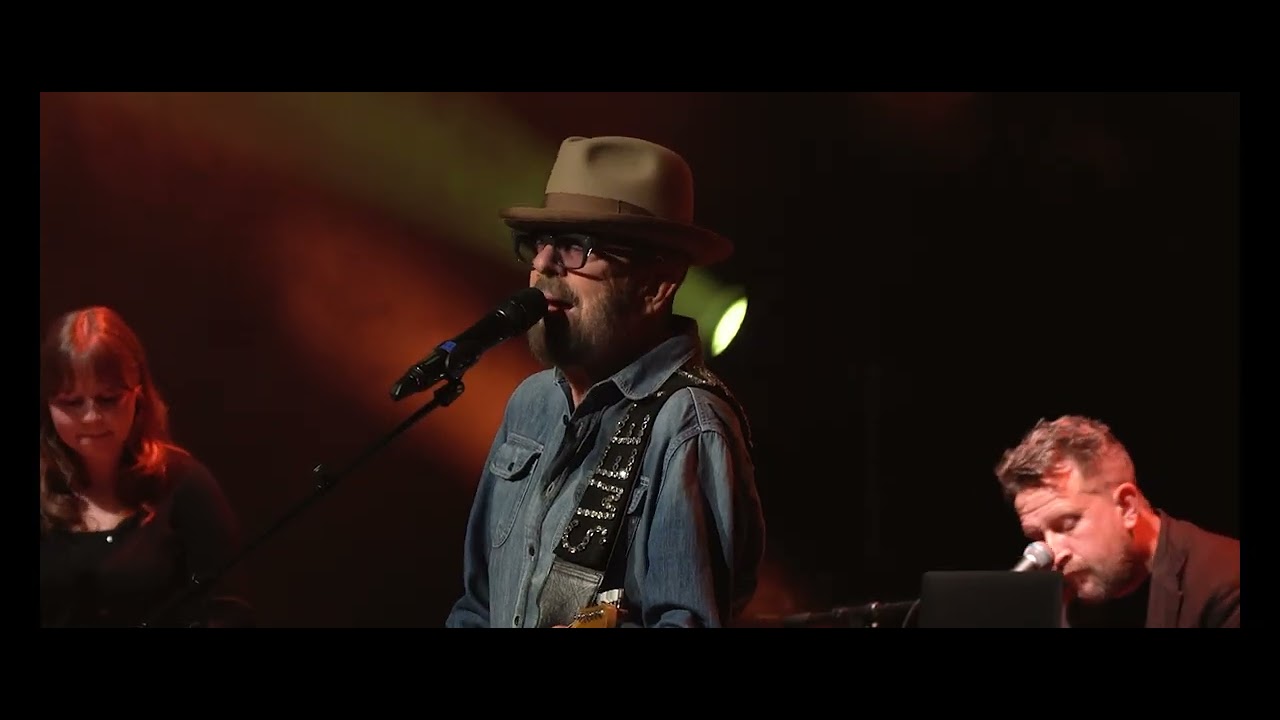
He put it in my hand, I played it through a little amp, and he was right. I’d never had one before, but it's a hollow-body Telecaster Custom, with the F-holes, you know?
I used that on just about every song, even when I'm just strumming it, like on The House Where I Was Born. On Makes Me Happy (and Sad), I overdubbed a slide part using the same Tele, but turning all the tone off and the volume full up. And it has a slightly George Harrison-y sound.
What amp did you find complemented that Tele?
I’d either go into this little Orange amp called the Tiny Terror or this really old Fender Champ. I didn't use any huge amps at all. But I would be really careful in dialing in the gain until it sounded jangly but also had a bit of bite.
Do you have commercial aspirations for this new album, in the way you might have for a Eurythmics release in the ’80s?
No, because we’re living in a completely different time and situation. Back in the day, 10 albums might have come out that week, and the record label would try not to clash. There was no online, no streaming, no DSPs, no social media. I’m hopeless at all that stuff.
Now, there’s hundreds of thousands of songs coming out every day. So I’ll probably just be lost in the quagmire, of which there'll be some really amazing music and then just loads of people prompting things into AI.
What would be your advice for a band just getting started?
I'm always talking to young artists who have been playing and performing for five or six years, and they're really struggling because they’re wondering, “How do we even get noticed?” And I always say that I still think the best way is to play live in your town. If 50 people turn up, or 10, it doesn't matter. Then play again. Then you play in the next town.
Slowly, after three or four years, you might be playing to 500 to 1,000 people. And those people are really there. It’s not like on social media, where you go, “Oh look, I've got 1,000 people following me.” Yeah, but where are they? They're all over the world. They’re not going to turn up to your gig.
- The Way It Was Back Then is out October 30 via Stardust Music.
- This article first appeared in Guitar World. Subscribe and save.